Be yourself; Everyone else is already taken.
— Oscar Wilde.
This is the first post on my new blog. I’m just getting this new blog going, so stay tuned for more. Subscribe below to get notified when I post new updates.
hairline Blog Posts
Be yourself; Everyone else is already taken.
— Oscar Wilde.
This is the first post on my new blog. I’m just getting this new blog going, so stay tuned for more. Subscribe below to get notified when I post new updates.
It might seem as if someone experiencing male pattern baldness, the most common form of hair loss, would be aware of it happening. But like weight gain and cognitive decline, it actually comes on gradually, unnoticed in the earlier (and most preventive) stages. Perhaps only when a barber or hair stylist suggests changing how the hair is cut – to work around an ever more hairless pate – does the individual come into awareness of his hair loss.
And to be clear, this is almost exclusively a problem for men. Women have hair loss also, but for the vast majority of them it happens in a generalized way across the full scalp, not in a pattern.
Since the 1950s, a chart of what male pattern baldness looks like, from earlier to later stages, has helped identify the degree to which a man has lost his hair. The chart, originally created by James Hamilton and updated in the 1970s by Dr. O’Tar T. Norwood, a dermatologist, created the Hamilton-Norwood Scale. It is most commonly referred simply as “the Norwood Scale.”
The Norwood scale breaks down the stages of hair loss into seven phases, the first being no recession of hair growth and the seventh where merely a “horseshoe” of hair following from ear to ear and to the neck remains, with the scalp free of thick hair growth (always a little bit of wispy hair remains, hardly discernable from casual observation).
In between those extremes of no loss and near total loss, the stages include:
Stage 2 – Recession from the temples
Stage 3 – Further recession from the temples, where the crown also thins or a bald spot up there is apparent
Stage 4 – Now a strip of hair separates the balding crown from the forehead
Stage 5 – Balding areas grow larger, as the strip separating the crown and the forehead is increasingly thinner
Stage 6 – Here is where the strip of hair disappears, with the crown and forehead bald spots joined
It bears mentioning that Norwood himself was also a pioneer in hair transplant surgery. It’s one of many ways in which hair loss can be addressed: medications that include minoxidil (Rogaine, etc.) and finasteride (Propecia, etc.) can restore hair growth, best used in the earlier stages. Hair replacement systems have improved considerably in recent years, as have transplant methodologies. What the Norwood Scale accomplished was it gave a language and benchmarks for assessing hair loss for individuals and their dermatologists. It also helps the individual to track the progress of hair loss, to identify from month to month and year to year how fast it is happening – where it likely will be in the not-distant future, and whether to take action sooner or later.
Hair loss in women is more common than most people think. Over their lifetime, about half of all women experience a noticeable thinning of hair, enough to cause around half of them to seek women’s hair loss solutions at the local hair loss clinic. The reasons range from use of important medications (including and especially chemotherapy), pregnancy and post-partum, over-styling of hair (use of chemicals or habitually wearing tight ponytails or braiding), and simply being over the age of 40.
But one of the most common causes of hair loss in women is menopause. It is referred to as Female Pattern Hair Loss, or FPHL. This is largely due to the decline in estrogen, leading to an overall thinning throughout the scalp. However, genetics can also play a role, as might poor nutrition.
Unlike male pattern baldness (MPB) – which is also largely driven by genetics and increases with age – the loss does not come with a pattern. Men experience horseshow shape of hair that remains, the rise of the hairless areas of the forehead, and the thinning at the crown. Women almost always simply have less dense hair over the full scalp.
So if menopause is inevitable, does that mean a thinning of hair is inevitable as well?
Not exactly. Again, genetics play a role here too. Some women are lucky to have thick hair their entire lives, others less so. And it is possible to grow some or all of the hair back. Here are things they can do about preventing post-menopausal hair loss:
Wash hair with a mild shampoo. Overall, treat it gently while combing (especially when wet), minimize use of hot dryers, and cut back on chemical use (including coloring).
Improve your diet. The matter of nutrition is similar to what you’ve no doubt been told over the years: Iron-rich foods such as meat, fish (e.g., salmon), eggs, leafy vegetables are important. Protein in general helps, as hair is made up of keratin, a type of protein that also comprises fingernails. The many nutrients in fruits and vegetables of all kinds are always beneficial for healthy skin and hair. The same can be said for whole grains (those that are not processed into white flour and white bread), as well as moderate amounts of dairy, which is richer in calcium.
Specific nutrients, by food or supplements. The healthy, pre-menopausal woman should be able to get all her nutrients from her healthy diet. But some research indicates that green tea (which has flavonoids), B6 vitamins (in tuna, salmon, chickpeas, poultry, papayas, oranges, and cantaloupe), and foods high in folic acid (spinach, broccoli, legumes, sunflower seeds, fresh fruit, liver, seafood) are most beneficial for healthier hair.
Exercise for circulation and stress reduction. Instead of thinking about exercise as merely a weight management tool or a way to achieve “tone,” consider it a hair-health move. Improving circulation through movement naturally brings more nutrients to hair roots, but perhaps just as important, it can reduce stress hormones (adrenaline and cortisol) and increase endorphin production, which can minimize depression and stress.
If the hair loss is not generalized – for example, patchy – it may be cause for a doctor visit. Hair sometimes is an indicator of other things going on in the body.
To picture someone with alopecia universalis, think of the performers in the popular Blue Man Group company, just minus the blue body paint. They have no hair, and while they perform clothed, you get the sense they have an otherworldly hairlessness all over.
Alopecia universalis is that: a universal loss of hair, from head to toe. It’s a disheartening hair loss condition, to say the least, and one with mysterious origins while lacking “silver bullet” hair loss treatments. But some recent off-label use of a medication otherwise approved by the US Food and Drug Administration for rheumatoid and psoriatic arthritis shows significant promise for reversing this form of hair loss.
Theories on the cause or causes of alopecia universalis range from genetics to stress to whatever might cause the immune system to attack cells that are in fact not foreign to the body. It is an autoimmune disease, which tend to run in families. Notably, there are associations between various types of alopecia and immunity dysfunction. In those cases, stress might trigger the onset of the condition.
While the loss is restricted to the hair itself – the roots remain healthy – alopecia universalis is characterized by smooth, unscarred-yet-hairless skin. The loss includes scalp hair, eyebrows, eyelashes, and body hair – even hair inside the nose. It can increase the risk of skin cancer, particularly on the scalp, due to unblocked sun exposure, but it is otherwise considered non-life threatening.
A 25-year-old male victim who had the condition also had patches of plaque psoriasis, which does affect the skin with scaly redness. When he received treatment for the psoriasis at Yale University School of Medicine, an unexpected side effect was his hair grew back – everywhere. After seven years of hairlessness, he regrew scalp hair, eyebrows, eyelashes, facial hair, armpit and other body hair. This was after three months of taking 15mg daily of tofacitinib citrate.
Following that one-patient incident in 2013, the medication largely worked in a small study of 20 people, 18 of whom were women and 14 had alopecia universalis (the others had lesser forms of alopecia). After three months of receiving the medication, 70 percent of patients showed regrowth to some degree, while eleven patients regrew more than 50 percent of the hair they had lost. After 12 months of treatment, 91.7 percent had some regrowth and 25 percent had a full regrowth of hair.
That study was published in the Journal of Clinical Aesthetic Dermatology (“Long-Term Treatment with Tofacitinib in Severe Alopecia Areata: An Update,” Hogan, Wang, Ibrahim, Piliang, Bergfeld, June 2019).
The treatment with tofacitinib citrate did involve some side effects, including elevation of cholesterol, triglycerides and low-density lipoproteins, palpitations, herpes zoster, and upper respiratory infection.
Regrowth also occurs spontaneously in untreated patients with alopecia universalis, with no medication whatsoever. For those who are not so luck, those who cannot access treatment or choose not to pursue it, or for whom that treatment is ineffective or problematic, many other forms of hair restoration or hair replacement can be pursued.
When we think about living a healthy life, we think about exercise and diet. But it surprises people that exercise not only can flatten a stomach and bulge a bicep, but also increase the quality and quantity of hair on their heads. Just imagine, investing time in improving exercise and diet early can save you a bundle at the local hair loss clinic later. Prevention can be much cheaper than years of hair loss treatments.
There are several reasons that attention to exercise and diet can help prevent certain hair loss conditions. And, there are a few ways in which a bad approach to weight management is detrimental to hair health. What good is to get ripped if you have thinning hair? Here are some good and bad approaches:
Increased blood circulation is GOOD: Hair is one of the fastest growing parts of the body, and to do so it needs nutrients. With exercise of any kind, the heart rate rises, bringing blood to the scalp and hair follicles as much as the other organs (including skin, which is itself an organ). That rosy flush from a workout session means your hair and scalp just got a meal of nutrients.
Smart nutrition is GOOD: That said about circulation, it does little good if all you eat are processed snacks and soda pop. The nutrients that are good for you in other ways – complex carbohydrates (fruits, vegetables, and whole grains), quality proteins, healthier oils, minimal sugar – will provide your hair with what it needs. For hair, it’s ok to place a little more emphasis on protein, which is what hair is made of … but don’t stop with just that.
Rapid and “yo-yo” weight loss are BAD: Extreme weight loss, particularly if it happens rapidly, signals to the body that it needs to use its reserves for more important functions than hair (from an evolutionary standpoint, hair is less necessary than, say, your heart, bones, and reproductive organs). This is why prisoners of concentration camps who were subjected to starvation are often bald. Individuals suffering from anorexia and bulimia frequently have brittle and thin hair. This is one of many reasons why a sensible approach to weight loss is strongly advised.
Unadressed sedentary lifestyle stress BAD: The Covid-19 global pandemic has heaped stress on even those not directly impacted by the coronavirus. California-based psychiatrist and author Jennifer Love, MD (“When Crisis Strikes: 5 Steps to Heal Your Brain, Body, and Life from Chronic Stress,” 2020, Citadel), told National Public Radio that, “We, as humans, like to have the idea that we are in control of our minds and that stress isn’t a big deal,” she says. “But it’s simply not true.” The story explores maladies that are up from the pandemic period, which include teeth grinding, insomnia, other physical symptoms that seem to lack a cause – and hair loss. A dermatologist at the Cleveland Clinic, Shilpi Khetarpal, told NPR his patients with stress-related hair loss since June 2020 have increased by a multiple of four.
The physical manifestations of stress are largely tied to the production of stress hormones, adrenaline and cortisol in particular. Without exercise to use that adrenaline, and to flush or prevent cortisol production overall, negative health impacts are almost guaranteed. At the very least, the stressed person can put on a mask and go for a walk outside – or do whatever exercise he or she can devise to reduce the impact of those adverse hormones.
Two hair loss treatments with approval from the Food and Drug Administration have restored hair loss to millions of people for a generation. But those medications, Finasteride (Propecia and Proscar brands) and Minoxidil (Rogaine brand and others), had some limitations, including fewer applications for the approximately 6.8 million people in the US, men and women, who suffer from alopecia areata. For those patients, the newly approved FDA drug is called baricitinib (Olumiant brand).
Alopecia areata is characterized by random, asymmetrical patches of hair loss, which distinguish it from the “typical” male pattern baldness and the overall thinning of hair women commonly experience. The cause of alopecia areata is a misfire in the patient’s immune system, where the defensive white blood cells attack some of the hair patches as if they were foreign to the person’s body. This not only affects scalp hair but can attack hair in other areas of the body. Importantly, the hair follicles do not die (just the visible hair falls out), so often the topically-applied Minoxidil can restore growth. Clinical studies show that baricitinib can have the same effect of restoring hair growth.
The disease typically affects adults. But there are children who have it as well.
There are millions of people around the world who suffer from severe alopecia areata. They include people with hair loss beyond the scalp – from near-total loss of hair on the head to eyelashes and eyebrows and body hair. The prescriptive medication is from Eli Lilly and Company and it targets severe alopecia areata. It is a once-daily pill taken orally and sold in 1 mg, 2 mg, and 4 mg dosages, taken according to the severity of the patient’s condition.
Patients taking the 4 mg/day dosage in clinical trials achieved 80 percent or more scalp hair coverage after following a 36-week protocol. This is not a solution that can be obtained at your local hair loss treatment clinic. These drugs must be prescribed by a physician.
Of note, this medication is used for another autoimmune disease, adults with moderately to severely active rheumatoid arthritis. It was also given an emergency use authorization (EUA) in November 2020 for patients hospitalized with COVID-19 who required supplemental oxygen.
There are side effects in use of baricitinib, which include upper respiratory tract infections, hypercholesterolemia, herpes zoster, herpes simplex, urinary tract infections, and gastroenteritis, among other conditions.
While the introduction and approval of this medication to address alopecia areata is not a cure-all for all kinds of hair loss, it’s an important advance for those who are most significantly impacted by it. The emotional and psychological well-being of patients with alopecia areata has been studied and documented: A measure knowns as HRQoL – health-related quality of life – was found to be substantially impacted, with patients exhibiting adverse symptoms with regard to personality, emotions, behaviors, and social functioning, accompanied by acute stress and alexithymia. About 300,000 people are newly diagnosed per year in the US with this condition.
Women’s hair loss conditions have become more prevalent in recent years. Many hair loss treatment clinics specialize in women’s hair loss solutions. While much of hair loss is due to circumstances outside one’s own control, such as genetics, there are several ways in which women can proactively address the health of their hair:
Wash, condition, and dry your hair the right way. How you treat your hair on a daily basis depends on knowing your hair’s relative condition, specifically if it’s oily or dry or somewhere in between. Perhaps with the advice of a stylist who can assess that objectively, pick your shampoos and conditioners accordingly. Where it comes to drying after shampooing, the kindest means for your hair is for it to dry on its own with only the light, non-tugging use of a cotton towel (some use microfiber towels or 100% cotton tee shirts, which cause less friction).
How you style your hair matters. After your hair is dry, specific styling considerations can greatly affect hair health. For example, tight braiding can cause breakage at the roots, not only pulling out strands of hairs but also introducing the opportunity for infections that can lead to permanent loss. Pins and clips, if used in the same exact place on the same strands of hair every day, can have a similar effect, so add some variety to how you wear (pin/clip) your hair. If you dye it, stay within just a few shades of your natural color (avoid the bleached-frizzes look). Use of perms, straightening irons and curling wands all are potentially harmful if overused. Hair worn long should get a trim every few months to eliminate the scraggly, dead-ends look.
Eat and drink for your hair. In its growth phase, hair is every bit as affected by the quality of your diet as are skin, nails, and the rest of your body. Made primarily of protein (keratin), it’s smart for anyone interested in healthy hair to eat leaner meats and poultry, and especially fish that also carry beneficial omega-3 fatty acids (salmon, sardines, anchovies, halibut, herring, mackerel, tuna, and fresh Bluefin tuna). Additionally, foods with higher zinc content – many vegetables (mushrooms, peas, spinach, beans, lentils, asparagus) and fruits (avocados, blueberries, blackberries, pomegranates, raspberries, guava, cantaloupe), as well as nuts (Brazil nuts, walnuts, pecans, cashews, almonds) – in combination with Omega-3s, stimulate hair follicles and overall improve scalp health.
And while water is good for just about everything, including hair, heavy alcohol consumption is associated with nutritional deficiencies that could impair hair growth. In a similar vein, yo-yo dieting (up and down weight gain/loss), and eating disorders – each of which drive nutritional deficiencies – can be deleterious to healthy hair.
Medications, medical conditions that affect hair loss. Some drugs are directly associated with hair loss. They are acne medications containing vitamin A, antibiotics and antifungal drugs, antidepressants, birth control pills, anti-blood clotting drugs, cholesterol lowering drugs, chemotherapy and radiation as a cancer treatment, and drugs that suppress the immune system. Hair loss might be secondary to the illnesses these address, and in most cases the hair loss is temporary until the medication is discontinued.
Reduce stresses for your tresses. According to the Mayo Clinic, emotional stress is associated with three types of hair loss: Alopecia areata (when the body’s immune system causes hair follicles to fall out in irregular patches of the scalp); telogen effluvium (when emotional upset forces a large portion of hair follicles to go into a resting phase and eventually fall out); and trichotillomania (when the individual pulls hair out of the scalp, eyebrows or other parts of the body).
In general, a healthy life translates into healthy hair. Not all illnesses can be prevented, of course, but it helps to at least understand when and why that happens – and to plan for a return to health in the best ways possible.
The irony of hair loss – in particular, male pattern baldness (also known as androgenic alopecia), but also various hair loss causes affecting men and women alike – is that there remains a lot of hair elsewhere on the body and scalp. It’s just not where you want it, and it increases with age. But there is a surgical technique for moving the unwanted hair to where it is needed (aesthetically speaking).
The most current hair transplant surgery technique for correcting this is known as Follicular Unit Extraction, or FUE. To understand how this is truly a breakthrough procedure, it helps to understand the path to its development and what came before it.
Since the middle part of the 20th century, various techniques for transplanting hair from those other locations have been used, with varying success. The first known hair transplant procedure was in 1939 in Japan, involving small dermal punches that lifted out sections of skin containing a complete hair structure (i.e., down to the roots), reimplanting them where wanted. That technique was largely forgotten because of World War II, until a New York based dermatologist (Dr. Norman Orentreich) used a similar technique, but with groups of dozens of follicles implanted at a time. It was called Follicular Unit Transplantation (FUT).
The unfortunate effect of the Orentreich method – which he himself performed on approximately 10,000 patients – was a “doll’s head” effect of little clumps of hair, not distributed in a natural way. By the 1980s, a different approach was to harvest from the donor area (typically the back side of the patient’s scalp, where it would be less noticed if the patient wore his or her hair long enough) in long strips. This enabled a more natural look with replanting sections of those strips in a more typical distribution. Called the Follicular Unit Transplantation (FUT), it worked on many patients as long as they had a sufficient donor area and loose enough skin to accept the transplant.
So how does FUE improve upon FUT? How are they similar? Let us count the ways:
With all hair transplantation techniques, there is micro-trauma that requires anesthesia and a recovery period of about a week. Given the near-100-year history of hair transplants, it’s clear that this is a small price to pay for those who want hair growth restored to where they want it: on their heads.
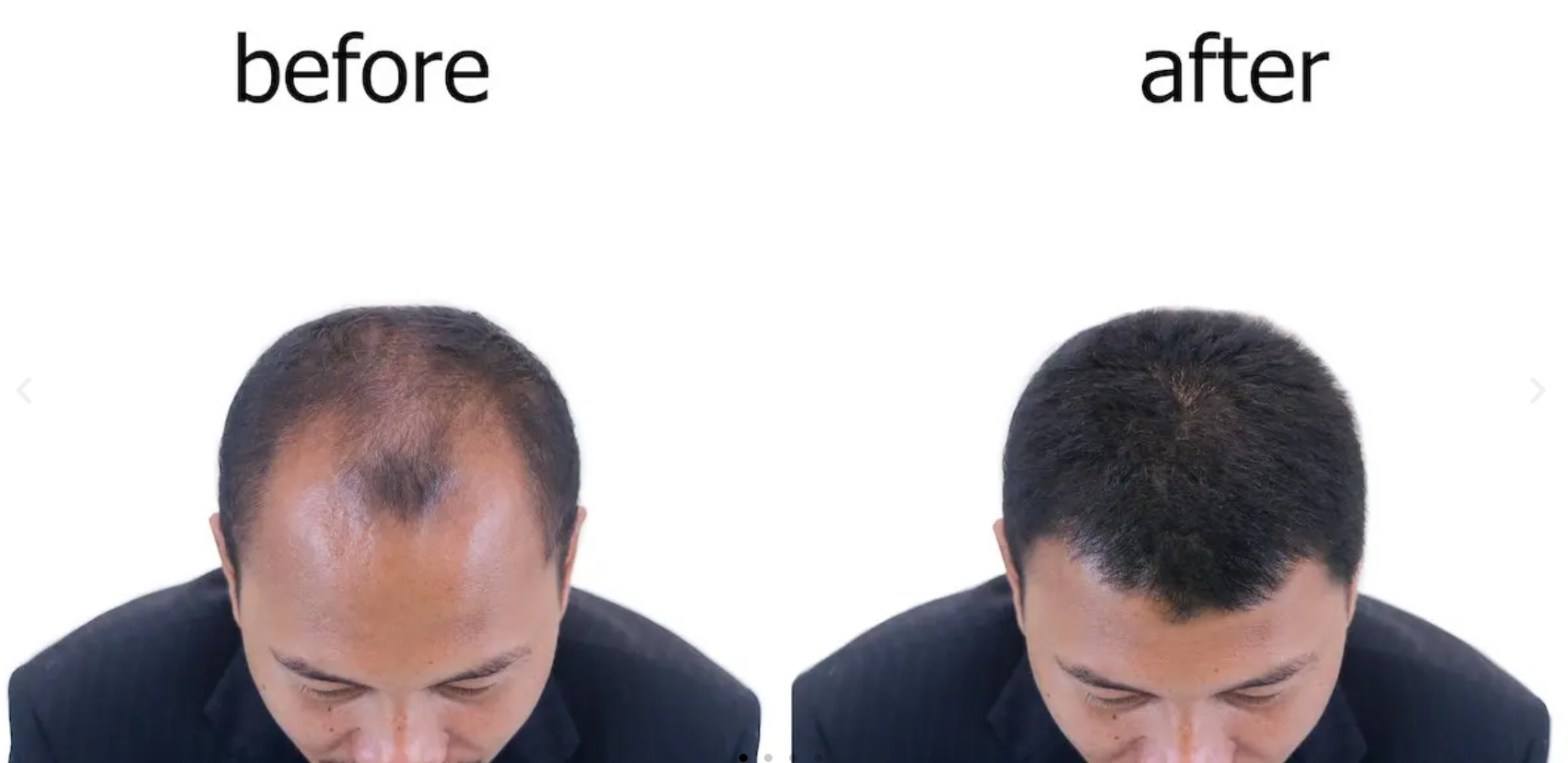
Since ancient times, the search for a cure for baldness – hair loss – has been a relentless pursuit. Julius Caesar himself perfected the comb-forward look, topped by a laurel crown, to mask his thin locks. It wasn’t convincing. He didn’t have the choice of hair loss solutions that men and women have nowadays, such as hair restoration surgery and laser hair loss therapy.
But recent research out of Harvard University, reported in the journal Nature, offers some hope for an actual hair loss cure. But it should be noted the research looked specifically at stress-related hair loss, which, while fairly common, is not the type of thinning experienced by the majority of men and a sizeable number of women as well. That version of hair loss is known as MPB, short for “male pattern baldness.”
Stress-driven hair loss can be psychological in nature (due to such things as divorce, job loss, serious illness in the family, etc.) or clinical. As much as 40 percent of persons who survived a serious case of COVID-19, particularly those who had fevers for days or weeks, have experienced some hair loss (coronavirus-related hair loss is believed to be temporary in nature, although time will tell). In any case, the stress of hair loss itself can drive further shedding of the follicles.
Stress-related loss has the medical name telogen effluvium, which is characterized by a premature forcing of more hair follicles into the resting phase, which is the phase of growth when hair is shed on even healthy, thick manes.
What the Harvard Stem Cell Institute researchers found – working with colleagues at MIT, Massachusetts General Hospital, the Icahn School of Medicine (NYC), and University Hospital Wurzburg (Germany) – was the stress hormone corticosterone was responsible for hair loss in mice. This hormone is equivalent to the human stress hormone cortisol. In higher quantities (i.e., in higher times of stress), corticosterone inhibited the normal activation of activation and growth of hair in the mice.
This was a discovery. And while it was with mice, not humans, and no mechanism (medicine or other therapy) has been devised to reverse this action, it is a breakthrough that might eventually lead to a means to counter the stress hormone.
Another study out of the University of Manchester (UK) Centre for Dermatology Research found that a drug developed to treat osteoporosis, Cyclosporine A (CsA) that is also a treatment for autoimmune diseases, can cause hair growth. Evidently it reduces a protein in the body (SFRP1) that inhibits hair follicle growth. Clinical tests to identify its safety in hair loss patients have not yet been done. But if successful, it would be useful for persons with male pattern baldness.
Two drugs have been on the market for a generation and are effective: finasteride (Propecia) and minoxidil (Rogaine, etc.). They come with some side effects and are most effective in the earliest stages of hair loss. Finasteride can have serious side effects on unborn fetuses, therefore use by women is highly discouraged. Needless to say, there is further discovery to be made around human hair loss, and, thankfully, there are scientists working on it.
“Just a spoonful of sugar helps the medicine go down,” go the lyrics in the movie Mary Poppins, the nanny with magical powers. But too much sugar might be the reason someone needs medicine in the first place. It also might be the cause of hair loss.
What? Ice cream on cake causes hair loss? Donuts with coffee is the cause of alopecia? Candy and cookies lead to shiny noggin?
Well, not exactly – although such things can be contributing factors. There are genetics involved, specifically those who are predisposed to diabetes. As it turns out, the damage of untreated adult-onset diabetes, which includes a failure of the individual to alter their diet and take up physical activity to address it, is that excess blood sugar affects the organs. That can include kidneys, the liver, the heart, eyes, nerves and the brain. But most important relative to hair are the blood vessels, as the circulatory system overall is an organ that feeds nutrients to hair.
This is not the type of hair loss condition that can be solved with a visit to the local hair loss treatment clinic offering the standard menu of hair loss solutions. One suffering hair loss due to diabetes should consult their physician.
When the blood vessels are affected by excess sugar, it reduces the ability of the circulatory system to deliver oxygen everywhere, including to hair follicles. Without sufficient oxygen, hair simply doesn’t grow as well, leading to hair loss. This doesn’t mean finding hair in the shower drain is an indicator of being diabetic or pre-diabetic, as some hair loss is a daily occurrence for everyone. Only when an uptick of that loss is noticeable should you be concerned.
Compounding the loss due to insufficient blood nutrients is an additional factor: stress, brought on by any adverse health diagnosis. Stress of any origin is well known to lead to hair loss, even if temporary. Add to that that diabetic hair loss is very often of the patchy type, known as alopecia areata, which can occur on the scalp as well as on parts of the body. The patches of hair loss are asymmetrical, appearing randomly, on the head and with body hair.
Thyroid disease, an immune disorder, often coincides with Type II diabetes – and can also contribute to hair loss. The disruption in the thyroid hormone impacts hair follicles as well, which then leads to an overall thinning.
Making things even more difficult is that the side effects of many kinds of medication – for diabetes, for thyroid, and for a host of other conditions – is hair loss.
The upside of all this is the hair loss from these conditions is very often temporary. The body treats hair as “nice but not necessary,” for example in times of extreme dieting or involuntary starvation (people with eating disorders often experience thinning hair). The nutrients hair requires are instead deployed to other, more essential bodily functions. Once those needs are addressed, hair growth very often can resume – no spoonful of sugar required.
If you are losing hair suddenly, at a rapid rate, and you’ve suffered from COVID-19, you likely are experiencing telogen effluvium (TE). This is a type of hair loss that is usually temporary, but common in the wake of physiological or psychological stress – perhaps not just from exposure to the coronavirus, but to the fear that goes with it.
The medical records of 552 patients at the Henry Ford Health System, collected between February 2020 and September 2020, seems to prove this out. Ten patients reporting hair loss were identified; on average, the shedding of their hair started about 50 days after the onset of COVID-19 symptoms, and 70% of them had been hospitalized (note this was earlier in the epidemic, before the vaccines were developed).
Another study (Trichodynia and telogen effluvium in COVID-19 patients: Results of an international expert opinion survey on diagnosis and management, JAAD International, Starace, et al., August 2, 2021), conducted later in the pandemic and published in the Journal of the American Academy of Dermatology (JAAD), found that TE was experienced by 66.3% of 128 patients. The majority of those patients, 62.5%, experienced hair loss symptoms within a month of their diagnosis; the remainder experienced hair loss after 12 weeks after their diagnosis.
In the conclusions of the JAAD study, the severity of hair loss correlated with the severity of the COVID-19 infection. Important to note is these patients self identified for having hair loss as they were seeing hair loss treatment specialists, therefore the incidence of hair loss is likely higher among this group than the general population of Covid patients. There was no control group in this study.
Many illnesses involving fevers are often associated with telogen effluvium. Another contributing factor is psychological stress, which can easily coincide with the physical illness. Other causes are a poor diet (lacking in protein, iron, B vitamins, and zinc), sudden weight loss, pregnancy and childbirth, menopause, some medications, and use of some recreational drugs (cocaine, methamphetamine, adderall). Telogen Effluvium is the type of hair loss condition necessitating a physician before consulting the local hair loss clinic.
In all TE cases, hair loss is characterized by an acute or chronic shedding of hair. In some cases there is pain in the scalp that patients experience when touching it or brushing their hair. Essentially, all hair sheds at some point (technically, it’s the third of three phases of hair growth, also known as the “resting phase”), but stressful conditions can prematurely hasten its onset. It is more common in women than men from any cause; this was the case with the COVID-19 patients as well (although clinicians suspect men experience TE more frequently than reported but because of shorter hair styles they are unaware of it).
The fix for TE? Time is mostly the great healer, as new hair grows in to replace what was lost. But reducing stress, eating healthier (protein, iron, B vitamins, zinc), and getting a little bit of good circulation-stimulating exercise all work together for general health and hair health.

 hairline